How to Demonstrate Curiosity and Initiative in an Interview
This guide shows practical, role-aware ways to demonstrate initiative in an interview. Learn three story patterns - learning experiments, scoped projects, and stakeholder saves - plus exact phrasing, guardrails, and stage-by-stage prep.

How to demonstrate initiative in an interview: show that you noticed a real gap, chose a bounded experiment or action inside your authority, aligned the right people, and described the outcome - all in a concise story. That pattern proves judgment, not rule-breaking, and fits recruiter expectations for initiative questions.
Key Takeaways
Use three story patterns: the Learning Experiment, the Scoped Project, and the Stakeholder Save.
Always state the gap, your specific action within authority, who you aligned with, and the practical result.
Different interview stages demand different proofs: resume bullets, recruiter screen signals, behavioral stories, and onsite examples each show initiative in their own way.
Curiosity must be purposeful - asking a good question is not initiative unless it led to action or a decision change.

Credit: Photo by Tima Miroshnichenko on Pexels
Stage 1 :- Resume and Application
At the resume stage, demonstrating initiative means signalling ownership and outcomes, not heroic lone-wolf stories.
Recruiters scan for role-fit and impact. Use one-line bullets that show you identified a gap and owned the next step: name the problem, the specific action you took, and the result or change in team behaviour. Keep the verb choices concrete: piloted, designed, reduced, launched - followed by a short outcome. This aligns with how structured interview frameworks ask about actions and results 1.
Practical examples you can test immediately:
Learning Experiment bullet: "Piloted weekly UX tests to validate onboarding changes; shortened time-to-first-task by improving copy (pilot outcomes used in Q2 roadmap)."
Scoped Project bullet: "Scoped and launched a Slack-based outage runbook for a 6-engineer team; reduced triage confusion during incidents."
Stakeholder Save bullet: "Volunteered to consolidate event reporting when peer was unavailable; delivered slides used by senior leadership."
Write these bullets assuming a recruiter will read only the first half of the line. Clarity beats clever wording.
Stage 2 :- Recruiter Screen and Phone Call
During a recruiter screen, initiative looks like early ownership and realistic short-term plans, not grand visions.
Recruiters often ask if youll be able to hit the ground running and what you would do in your first 30-90 days 2. Treat this as an opportunity to describe the first steps you would take and the evidence you would gather. That shows initiative without implying youd bypass managers or existing processes.
Answer structure: name one immediate priority, the first 2-3 actions you would take, and one quick win youd aim for (be realistic).
Example phrasing: "My first priority would be to map our customer-facing metrics. Id first meet with product and support, review dashboards, and run two quick interviews with power users to validate assumptions - aiming to identify one backlog item we can fix in the first sprint."
Giving a sensible early plan signals judgment and readiness - exactly what the interviewer is testing when they ask initiative-style questions 2.
Stage 3 :- Behavioral Rounds - How to Demonstrate Initiative in an Interview
Behavioral interviews are where you need a compact, sequenced story showing detection, decision, and outcome in clear steps.
Interviewers expect Situation, Task, Action, Result detail and will push until the decision point and constraints are obvious 1. Use one of the three story patterns below and make the decision point explicit: why you acted, what options you rejected, and why your choice fit the team context.
The Learning Experiment pattern
Use this when you spot uncertainty or a knowledge gap and your initiative was to run a low-cost test.
Situation: Briefly name the assumption or gap.
Action: Describe the experiment you designed, the data you gathered, and who you involved.
Result: State the decision the team made or the change in direction because of the test.
Example phrasing: "Our churn spike coincided with an onboarding change (situation). I proposed a two-week A/B pilot limited to new signups and worked with analytics to track time-to-first-success (action). The pilot showed a clear drop in time-to-success, so we rolled the change out to a wider group of users and rebuilt the onboarding checklist as standard the following quarter (result)."
The Scoped Project pattern
Use this when you privately own a small, well-bounded improvement that reduced friction or saved time.
Situation: Name a recurring pain point.
Action: Explain the specific scope you took on and how you avoided scope creep.
Result: Give the operational outcome or the behaviour change.
Interview phrasing: "We had a manual report that took three people a day each month. I proposed automating the data pull for the most-used fields, built a script, and documented how to run it (action). That cut prep time and freed two people for analysis (result)."
The Stakeholder Save pattern
Use this when you stepped into a gap because the team risked missing a deadline or delivering low-quality work.
Situation: Explain the immediate risk or dependency.
Action: Say what you did and how you communicated your limits to stakeholders.
Result: Describe the immediate mitigation and any follow-up to prevent recurrence.
Real-world example: "A teammate fell ill before a board update (situation). I volunteered to consolidate the spreadsheet and write the narration, then asked the manager which slides required senior approval and which could be adjusted later (action). The leadership deck was delivered on time and my manager thanked the team for stepping up publicly 3."
Stage 4 :- Technical or Role-Specific Interviews
In technical rounds, initiative is demonstrated through how you structure problem solving, surface trade-offs, and propose follow-ups - not by ignoring constraints.
Show initiative by documenting assumptions, proposing a small experiment or prototype, and clarifying intent with the interviewer. For engineers, that might mean outlining a short spike to test an approach; for product roles, proposing a 2-week user validation plan; for sales, offering a pilot outreach script and metrics to evaluate it.
Phrase it like this: "Given X constraint, Id prototype A for a week to validate Y, then iterate based on user feedback." That shows you can move from idea to execution without promising impossibilities.
Stage 5 :- Final Loop and Hiring Committee Conversations
At the final loop, initiative becomes evidence that your actions scale and align with team priorities.
Bring a story where you explicitly aligned stakeholders early, documented a fallback, and measured impact. Hiring committees look for judgment: did you act in ways that respected process and authority while still moving work forward? That is the exact competency behind initiative questions in structured interview guides 1.
If asked, tie your stories back to team outcomes and next steps you recommended for sustaining the change.

Credit: Photo by Ketut Subiyanto on Pexels
Role And Level Variation
How initiative shows up changes with seniority and role: junior hires show initiative through scoped experiments and quick wins; senior hires show it through stakeholder alignment, trade-off decisions, and organisational follow-through.
Entry-Level: Focus on scoped work you drove end-to-end and what you learned.
Mid-Level: Emphasise cross-functional alignment and how your change scaled to other teams.
Senior/Leadership: Show strategic initiative - how you prioritised options, built consensus, and institutionalised the change.
Always frame initiative in the language of authority: what decisions you could make, who you checked with, and how you documented follow-up. That avoids the common trap where initiative sounds like bypassing managers.
What's Changed Recently (2026)
Interviewers in 2026 are placing more weight on learning agility and experiments because roles change faster; they expect candidates to show how they learn, test, and adapt rather than only list past deliverables.
At the same time, many organisations use structured behavioral or situational formats to compare candidates consistently, so clear demonstration of decision points and measurable outcomes matters more than ever 1. Also, curiosity now gets tested as a trait that must lead to action: asking good questions is useful only if it produces a follow-up or a test.
One practical corollary: prepare stories that include a short follow-up plan. That signals you would not only notice a problem but also own the next sensible step.
How To Prepare For Each Stage
Preparation should be stage-specific and practise-driven. Role-specific rehearsal is more effective than generic scripting - research first, then practise. That is one of the few strong rules I will insist on: research before practice; otherwise your practice rehearses the wrong problem.
Resume: Pick 3 initiative stories and condense each to a single, impactful bullet.
Recruiter Screen: Draft a 30-60 second "first 30/90 days" plan that names one early action and one realistic win. Test it out loud.
Behavioral Rounds: Write three stories (one per pattern), practise them to 90-120 seconds, and strip any wandering context. Record yourself and cut filler words (you will hear them).
Technical Rounds: Prepare a one-paragraph prototype plan for two common design problems in your role and practise describing assumptions and small experiments out loud.
Final Loop: Prepare a one-slide narrative summarising the initiative, alignment steps, and measurable outcome you delivered.
To turn preparation into confidence, practise under pressure. Run a mock behavioral round that focuses on initiative stories and immediate framing - it exposes pacing and missing decision points quickly (the mock-interview reality check is a recurring failure mode for candidates) [stories.md]. If you want to practise a behavioural or role-specific round, run a mock interview for this round at /?module=practice.
Common Mistakes And Guardrails
Short answer: dont confuse curiosity with performative trivia, and dont let initiative sound like disrespecting process.
Performative curiosity: Asking trivia about a product launch is noise unless you show how youd use that fact to change something.
Authority overreach: Describe who you checked with. Initiative without alignment looks like rule-breaking.
Long-winded stories: If your result needs more than two sentences to explain, you probably missed the decision point. Tighten the action and the outcome.
Keep guardrails explicit in your story: who you informed, what constraints you respected, and what follow-up you recommended. That keeps initiative safe and promotable rather than risky.
Actionable Scripts: How To Open Initiative Stories
Open with a one-sentence frame, then deliver the decision point and the concrete action.
Frame: "We faced X problem that was causing Y impact."
Decision: "I proposed Z because A, B, and C - and I recommended a 2-week pilot to limit risk."
Action + Result: "I ran the pilot with analytics and product, then we adopted the change because metric M improved."
Practice these openings until they are crisp; the opener carries the weight of the whole story.
Frequently Asked Questions
How many initiative stories should I prepare?
Prepare 3-5 initiative stories mapped to the three patterns above and to the role you are applying for. Candidates with fewer stories often sound unprepared; candidates with too many stories ramble. Three is the sweet spot for interviews.
Can volunteer or academic work count as initiative?
Yes. Initiative is about the decision and the follow-through. If your volunteer or academic example has a clear decision point, an action you owned, and an outcome, it fits any role-level interview.
Is it okay to say a plan failed?
Yes - failing is acceptable if you show what you learned and the corrective steps you took. Interviewers care about learning and judgment as much as success.
How To Get Started: A Practical Session
Do this sequence once and you will leave with three usable stories.
Pick three candidate examples and write one-sentence frames for each.
Expand each into a concise script using the patterns above and trim any wandering context.
Record yourself saying each story out loud and note filler words or pacing issues.
Run a timed mock behavioral round or swap stories with a friend and request blunt feedback.
If you prefer structured practice, run a mock behavioral round tailored to initiative questions at /?module=practice.
Where Candidates Usually Go Wrong
Most candidates either describe action without a clear decision point or they describe decisions that ignored alignment with stakeholders. Initiative in interviews is not about being the lone hero; it is about judgment inside the team's constraints.
Concrete change to make: pick one story and strip it down to the decision point, the low-risk action you took, who you aligned with, and the measurable or observable result. Practise that tight sequence until the pauses feel intentional.
It is not easy to compress messy work into two minutes, but it's the skill interviewers reward. If you practise it out loud, youll quickly find where the story leaks - and that leakage is where the preparation helps most.
Next Step: Run A Targeted Mock Round
If your next interview includes behavioral or recruiter screens, run a mock interview that focuses on initiative and curiosity stories - you will expose pacing problems and missing decision points faster than solo rehearsal. Run a mock interview for this round at /?module=practice.
Closing Note On Research And Practice
One clear opinion: research before practice. Practice sharpens delivery; research ensures you practise the right stories for the team and role. If your mock interview rehearses the wrong problem, youll sound polished and misplaced. (Yes, I have seen that happen too many times.)
Good preparation is part honesty, part rehearsal. Do the work, run the test, and aim to tell the truth well.
Sources & References
References used for the linked claims in this article.
- [S1]Structured Interview Guide · opm.govexplains that behavioral interview questions should elicit situation, task, action, and result and contrasts behavioral with situational (future-oriented) formats
- [S2]8 Interview Questions About Initiative (With Sample Answers) · indeed.comstates employers ask initiative questions to see if candidates are ready to start making contributions and recommends preparing realistic, early goals
- [S3]10 Behavioral Interview Questions (With Sample Answers) · 2026-06-15T00:00:00.000Z · indeed.comgives an example of volunteering to cover a teammate's work as a way to show initiative and dedication
Claims last checked against these sources on 2026-09-21T00:00:00.000Z.
Keep reading
Related guides picked for this topic.
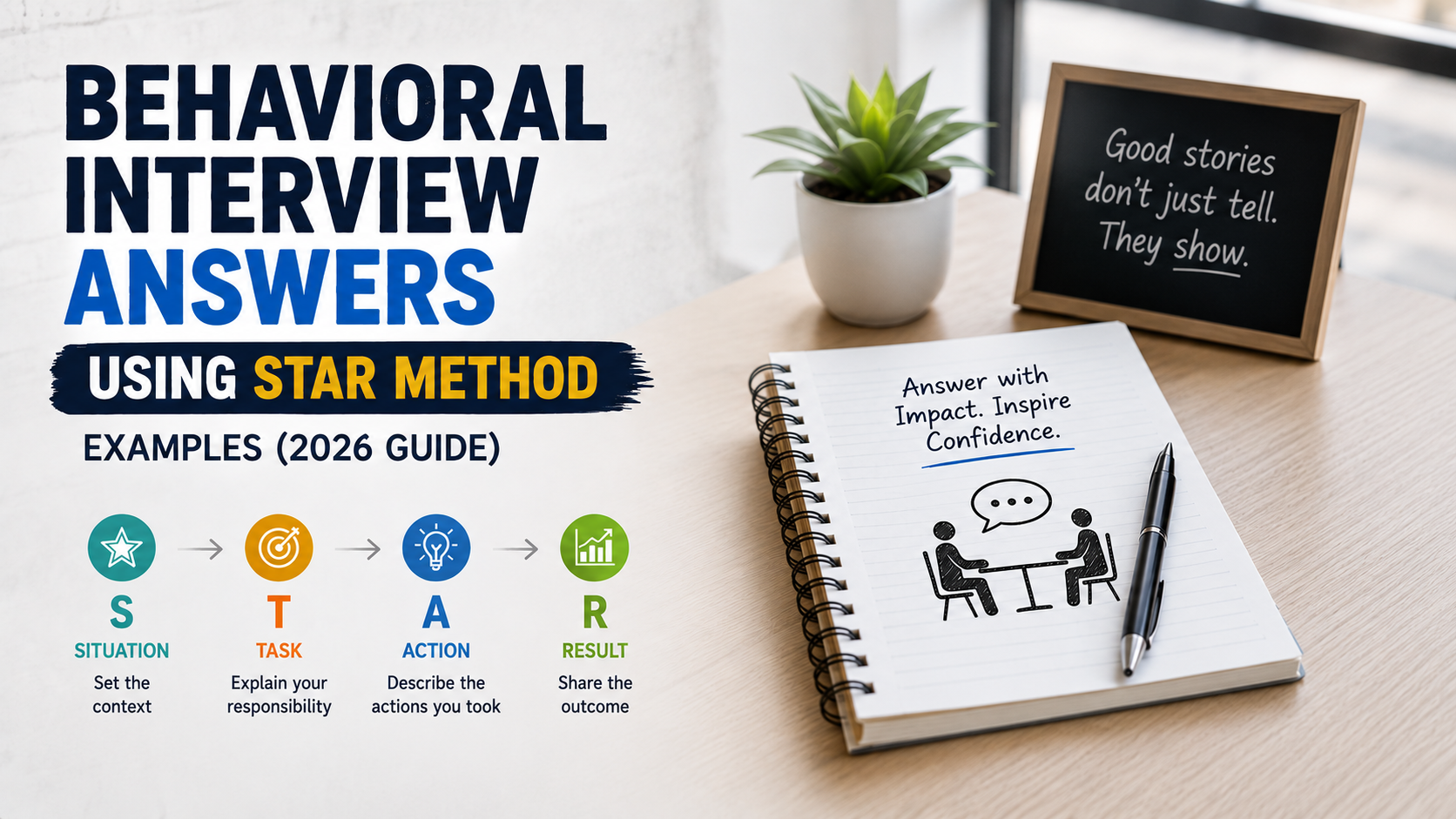
Behavioral Interview Answers Using STAR Method Examples (2026 Guide)
Master the STAR method for behavioral rounds in tech. Learn the scoring framework, access level-calibrated examples, and prepare high-scoring responses.

Hogan Assessment: How to Read 3 Scales 2026
Many hiring teams use the Hogan Assessment to predict workplace behaviour. This guide explains the Hogan assessment, the three inventories (HPI, HDS, MVPI), how employers use results, and practical, free ways to prepare before your next interview.
More from AllyNerds
Not directly related, other guides readers find useful.

Skills-Based Hiring: Turn Job Ads into Proof for Interviews
Skills based hiring is shifting hiring decisions from credentials to demonstrable proof. This piece shows how to extract skills from a job description and turn each into a proof story, project sample, and likely interview follow-up.

AI Interviews: Stage-by-Stage Walkthrough for Candidates
AI interviews now cover everything from scheduling bots to AI-scored video screens; candidates need to know what will be evaluated and what they can ask. This piece walks each common stage, where transparency is missing, and exact prep moves to use before you sit down.

AI-Era Traits to Show in Interviews: Curiosity & Initiative
Employers increasingly prize curiosity and initiative as AI automates routine work. This piece reviews employer evidence, explains why those traits matter in interviews, and gives concrete examples candidates can use to demonstrate them.

CoderPad Interview: 5 Practical Tips 2026 Now
Candidates often freeze in live coding rounds. This guide to the CoderPad interview covers the format, what CoderPad actually records, employer variations (including Goldman Sachs), and concrete practice steps so you walk into your next live round confident.