Microsoft System Design Interview for Senior Engineers 2026
Microsoft's system design round is different from Google or Amazon -- it is collaborative by design, scored on trade-off reasoning rather than perfect architecture, and in 2026 increasingly includes AI infrastructure questions for senior roles. This guide covers the full format, level expectations, and what most candidates miss.

Microsoft system design interviews for senior engineers in 2026 run 45-60 minutes per round, use a collaborative whiteboard format (not solo performance), and score on trade-off reasoning, communication, and operational thinking -- not just whether your design is correct. For L63 and above, system design carries more weight than coding in the final hiring decision. AI infrastructure questions now show up in roughly half of senior Microsoft loops.

Photo by Christina Morillo via Pexels
How Microsoft System Design Interviews Work in 2026
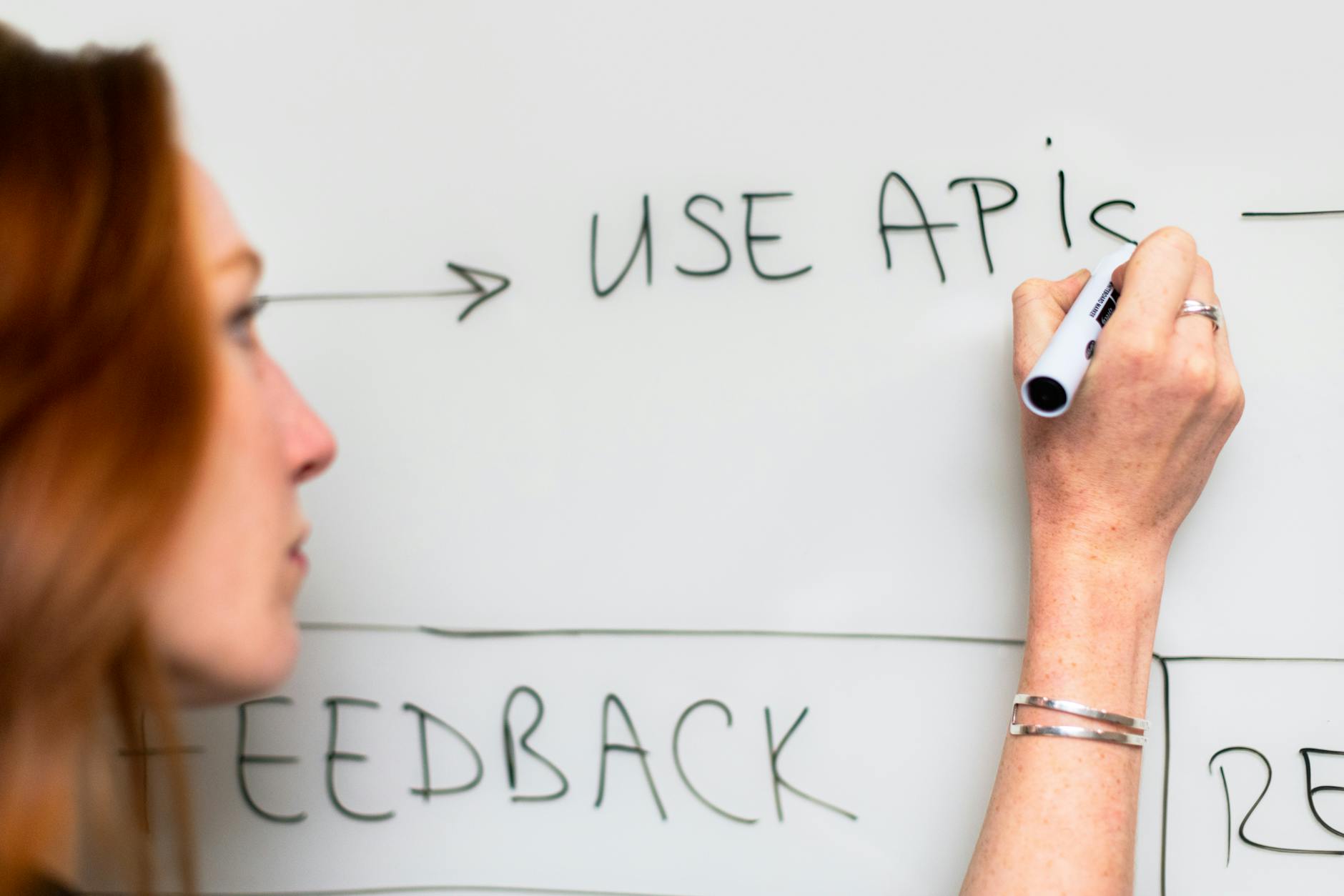
Microsoft has moved away from the solo whiteboard format that used to define system design interviews. The current format is collaborative -- the interviewer participates, asks clarifying questions throughout, and redirects the problem scope based on where you take it.
This matters for how you prepare. If you have practiced by designing systems silently and then presenting a finished diagram, that habit will work against you here. Microsoft interviewers want to see the thinking, not just the output.
What the format looks like in practice:
You get a broad prompt (design a notification system, design a URL shortener at scale, design a real-time analytics dashboard)
You clarify requirements by asking questions -- this is expected and scored, not just tolerated
You work through the design out loud, making decisions and explaining trade-offs as you go
The interviewer steers, adds constraints, or changes requirements mid-session
You adapt without starting over
The last point is one most candidates are not prepared for. Microsoft interviewers will intentionally add a constraint halfway through -- "now assume the system needs to handle 10x the traffic" or "the team has decided we cannot use a managed queue service." How you handle that pivot is part of what they are scoring.
What Microsoft Scores in System Design at Senior Level
For senior roles (L62-L65), Microsoft evaluates system design on four areas:

Photo by RDNE Stock project via Pexels
Trade-off reasoning: Not whether you picked the right architecture, but whether you know what you gave up by picking it. Choosing eventual consistency over strong consistency is fine. Choosing it without explaining the trade-off is not. Every major decision should have an explicit "and the downside of this is..."
Communication clarity: Can a non-expert on your team follow your reasoning in real time? Microsoft senior engineers regularly work with PMs, designers, and stakeholders who are not deep technical. The ability to explain complex design decisions clearly is treated as a job skill, not a presentation skill.
Operational thinking: This is what most junior-to-mid candidates skip. How does your system fail? What happens when a service goes down? How does the team know something broke before customers do? Monitoring, alerting, graceful degradation, and recovery paths are now explicitly scored at L63 and above.
Adaptability: How you handle constraint changes mid-interview. Do you panic? Do you restart from scratch? Or do you adjust the relevant parts of your design and explain the knock-on effects? Senior engineers deal with changing requirements constantly. This is a simulation of that.
Level-Calibrated Expectations -- L62 to L65+
Microsoft's system design expectations scale significantly with level. Preparing for the wrong level is one of the most common prep mistakes.
L62 (Senior SWE): Design a single service or component with clear inputs, outputs, and scale requirements. Trade-off reasoning expected but can be guided. Operational concerns are a bonus, not a requirement.
L63 (Senior SWE II): Design complete systems with multiple services and integration points. Trade-offs should be proactive, not prompted. Operational concerns (monitoring, failure modes) expected. You should be steering the conversation, not waiting to be led.
L64 (Principal / Senior SWE III): End-to-end system ownership. You are expected to define the problem scope, not just answer the prompt. Non-obvious trade-offs, cross-service dependencies, and long-term maintainability are all fair game. The interviewer is less directive.
L65+ (Distinguished / Partner): The prompt is almost irrelevant. You are being evaluated on architectural judgment at organizational scale -- how systems interact with other systems, how you think about build vs buy, how you make decisions that affect multiple teams. These interviews often feel like a senior architecture discussion, not a test.
If you are unsure which level you are interviewing at, ask your recruiter directly. Preparing for L63 when you are actually at L65 will show immediately.
Common Microsoft System Design Questions for Senior Engineers

Photo by Ann H via Pexels
These come up consistently across Microsoft senior engineering loops:
Distributed systems:
Design a distributed cache with high availability and low latency
Design a rate limiting service for a high-traffic API
Design a job scheduling system for a large-scale data platform
Real-time and messaging:
Design a real-time notification system for 100 million users
Design a pub/sub messaging system that guarantees at-least-once delivery
Design a live collaboration system (similar to Teams or Office 365 co-authoring)
Storage and data:
Design a time-series data storage system for telemetry at Azure scale
Design a search system that handles typos and partial matches
Design a file storage system with versioning and access control
Azure-flavored questions (common for Azure-adjacent teams):
How would you design a multi-region deployment for a mission-critical service?
Design a system that handles failover between Azure regions with sub-minute RTO
The Azure-specific questions appear more in cloud infrastructure and platform teams than in product engineering teams. Check which team you are interviewing for and calibrate accordingly.
AI Infrastructure Questions in 2026 -- What Microsoft Now Expects
This is what most 2025-era prep guides miss entirely.
AI infrastructure questions now appear in roughly half of Microsoft senior engineering loops, particularly for L63 and above. This started appearing consistently post-2024 as Microsoft's AI investments accelerated across Azure, Office, GitHub Copilot, and Bing.
These are not "explain how a neural network works" questions. They are systems questions applied to AI workloads:
"Design a system that serves large language model inference at low latency for millions of concurrent users."
"How would you design a pipeline that fine-tunes a model on customer data while preserving data privacy?"
"Design a monitoring system for a production ML model that detects performance degradation before it affects users."
"How would you architect a retrieval-augmented generation system for an enterprise knowledge base?"
What Microsoft is scoring here: the same things they score in regular system design. Trade-offs (GPU cost vs latency, batch vs streaming inference), operational thinking (model drift monitoring, rollback strategy), and communication clarity.
You do not need to be an ML engineer to answer these well. You need to understand the infrastructure concerns -- serving, scaling, monitoring, cost -- that apply to any distributed system, with AI-specific constraints layered on top.
If AI infrastructure is genuinely new to you, spend a few hours understanding the basics: inference vs training compute, vector databases, and why LLM serving latency is a different problem from web API latency. That is enough to handle these questions at a senior level.
The Collaborative Format -- How to Work With the Interviewer, Not Around Them

Photo by Gustavo Fring via Pexels
Most system design interview prep treats the interviewer as a passive observer. Microsoft's format means this approach will cost you.
Some specific things that work well in Microsoft system design rounds:
Check in as you make decisions. "I am going to use a message queue here to decouple these services -- does that align with what you had in mind, or is there a constraint I should factor in?" This signals senior communication instincts, not uncertainty.
Name your trade-offs before the interviewer asks. "The downside of this approach is that it adds operational complexity and a new failure point. At this scale I think that is worth it because..." Getting there before they prompt you is the difference between a Hire and a Strong Hire at senior level.
Handle constraint changes explicitly. When the interviewer adds a new constraint, say out loud: "OK, so with that change, the main impact is on [X component] and [Y assumption I made earlier]. Let me revise the data flow here..." Do not silently redraw the diagram.
Ask about priorities, not just requirements. "Is latency more important than consistency here, or should I optimize for both with the assumption of unlimited infrastructure?" This is how senior engineers talk to stakeholders. It reads as domain maturity, not hedging.
How to Prepare for Microsoft System Design as a Senior Engineer
The candidates who clear Microsoft senior system design rounds do not necessarily have the best architectural knowledge. They have the best habit of thinking out loud, explaining trade-offs, and adapting under constraint.
Here is a focused prep approach:
Build a trade-off vocabulary. For every major architectural decision (consistency models, caching strategies, messaging patterns, database choices), practice articulating the trade-off in one clear sentence. "Eventual consistency means higher availability but requires the client to handle stale data" is better than "it depends."
Practice with constraint changes. Design a system, then add a new constraint after you are halfway through. How quickly can you identify what changes and what does not? This is the skill most people do not practice and most Microsoft interviews test.
Add operational thinking to every design. Before you finish any practice design, ask yourself: how does this system fail gracefully, how do I know when it is failing, and how does the team recover it? If you cannot answer those three questions, the design is not ready for a senior-level interview.
Know at least one AI infrastructure concept. Even something basic: understand the difference between an inference endpoint and a training job, what a vector store is used for, and why LLM serving is latency-sensitive in a different way than database reads. Twenty minutes of reading is enough for senior-level system design fluency in this area.
Practice with a partner who interrupts. Seriously. Find someone who will add constraints mid-session, ask "why not just use X instead," and make you explain your decisions in plain language. Practicing against silent observers does not prepare you for Microsoft's collaborative format. Practice with role-specific mock interviews that push back on your decisions the way a real Microsoft interviewer would.

Photo by Jakub Zerdzicki via Pexels
Microsoft System Design Interview -- What the Loop Looks Like
For context on where system design fits in the full Microsoft senior interview loop:
Most senior Microsoft loops run 4-5 rounds in a single day:
Coding (1-2 rounds): Algorithms and data structures, language of your choice
System design (1-2 rounds): The focus of this guide, more rounds at higher levels
Behavioral (1 round): Growth mindset, collaboration, handling failure -- Microsoft's culture framework
Hiring manager round: Often combined with one of the above
At L63 and above, system design rounds typically outnumber coding rounds. At L65+, the loop may be entirely system design and architectural discussions with minimal to no LeetCode-style coding.
Frequently Asked Questions
How long is a Microsoft system design interview for senior engineers?
Each system design round runs 45-60 minutes. Senior loops typically include 1-2 system design rounds depending on level. L63 and above usually have 2 rounds; L62 typically has 1.
What level of Microsoft interview focuses most on system design?
L63 (Senior SWE II) is where system design becomes the primary differentiator. At L62, coding and system design are roughly equal. At L64 and above, system design dominates and may replace coding rounds entirely.
Does Microsoft ask AI or machine learning system design questions?
Yes, increasingly so. AI infrastructure questions now appear in roughly half of Microsoft senior engineer loops (L63+). These focus on inference serving, monitoring ML models in production, and AI pipeline design -- not ML theory or model training mechanics.
How is Microsoft system design scored differently from Google or Amazon?
Microsoft emphasizes collaborative format and operational thinking more explicitly than Google (which focuses more on optimal solutions) or Amazon (which leans heavily on LP alignment). Microsoft interviewers expect you to work with them, not present to them.
Should I use Azure-specific services in my Microsoft system design answers?
It depends on the team. Azure-adjacent teams (infrastructure, cloud, platform) appreciate Azure service knowledge. Product engineering teams for Teams, Office, or Xbox are more agnostic. Ask your recruiter which team you are interviewing with and tailor accordingly.
How do constraint changes work in the Microsoft system design interview?
Microsoft interviewers deliberately add or change constraints mid-session to test how senior engineers adapt. When this happens, name what changes in your design, explain the knock-on effects, and revise the relevant components. Do not restart from scratch and do not ignore the new constraint.
Final Thoughts
Microsoft's senior system design interview rewards the habits that senior engineering actually requires: thinking out loud, explaining trade-offs clearly, adapting to changing requirements, and thinking about how systems fail -- not just how they work.
The prep for this is not just solving more architecture problems. It is practicing the right behavior while you solve them: naming trade-offs before being asked, checking in with the interviewer, handling pivots calmly, and adding operational thinking to every design.
The AI infrastructure angle is the piece most candidates are not ready for in 2026. Twenty minutes of background reading and one practice session with that framing puts you ahead of most of the field.
Practice mock Microsoft system design interviews on AllyNerds with role-specific interviewers who interrupt, add constraints, and push back on your trade-off reasoning the way real Microsoft panels do. The collaborative format is a skill. It needs to be practiced collaboratively.
Keep reading
Related guides picked for this topic.

Netflix Data Engineer Interview Questions 2026
Netflix data engineer interviews are technically hard and culturally specific. The culture memo round catches more candidates off guard than the SQL questions do. This covers the full loop, real question types, and the hiring manager dynamic most guides skip
Google Software Engineer Interview Process (2026): Stages, Rounds & Prep
Google's SWE interview is one of the hardest in the industry , not because of the questions alone, but because of how many rounds there are and how specifically they evaluate you. This guide covers every stage, the 2026 code comprehension pilot, hiring committee scoring, and how to prepare for each round.

OpenAI Interview Process 2026: What to Expect | AllyNerds
Many candidates treat OpenAI Interview Process 2026 like any FAANG loop. This guide explains why OpenAI's rounds differ, what interviewers actually evaluate, and exactly how to prepare for coding, system design, and project deep dives.

Karat Interview What to Expect: Format, Prep, Pass
Most candidates panic at third-party screens. This guide covers Karat interview what to expect, the format, evaluation rubric, sample questions, and how to practice a Karat-style round.
More from AllyNerds
Not directly related — other guides readers find useful.

Meta Behavioral Interview Questions for Engineers 2026
Meta's behavioral round trips up more engineers than the coding rounds do. This covers the questions, what the Jedi round actually tests, and how Meta weights behavioral scores against technical performance in 2026.

AI Engineer Interview Questions 2026: Complete Guide
Most candidates underprepare for AI roles. This guide on AI engineer interview questions 2026 covers the interview loop, RAG and evaluation design, prompt engineering, system trade-offs, and a 6-step prep plan so you can practice effectively before your next loop.