Rejected After Final Round Tech Interview? ,What Went Wrong?
Getting rejected after a final-round tech interview is brutal. Learn the hidden reasons why companies pass on strong candidates and how to recover

Being rejected after a final round tech interview what went wrong 2026 usually comes down to non-technical factors. At the final stage, your technical skills are already validated. Rejection occurs because of trust issues, team alignment mismatches, budget shifts, or compensation band discrepancies. These hidden variables are rarely shared with candidates.
The Pain of the Final Round Rejection
Reaching the final round is an achievement. It means your resume passed the screening. It means you cleared the initial coding test. It means you survived the system design panel.
Then the email arrives. The recruiter sends a template message. They appreciate your time. They are moving forward with other candidates.
You feel confused. Your code ran. Your system design was scalable. You answered the behavioral questions using the STAR method. Yet you still got rejected after onsite interview FAANG.
The hiring process is not a meritocracy. It is a risk-reduction process. By the final round, the evaluation changes completely.
The Hidden Reason: The Almost Candidate Problem
Hiring managers often face a luxury problem. They have two excellent candidates but only one headcount.
This is the almost candidate problem. You did nothing wrong. Your performance was outstanding. Your code was clean. Your communication was structured.
The other candidate had one specific advantage. Perhaps they worked with the exact database version the team plans to adopt next quarter. Perhaps they had prior domain experience in fintech.
The decision is not a rejection of your skills. It is a selection of a slightly closer puzzle piece.
Why Rejected Final Round Interview Strong Performance
The final interviewers are looking for different signals than earlier rounds. They are scanning for risks.
The common non-technical dealbreakers include:
Trust and ownership gaps: You explained a production outage but blamed your product manager. Senior leaders want candidates who own outcomes.
The collaboration paradox: You described a major project using the word "we" too much. The interviewer could not isolate your personal contribution.
Compensation band misalignment: You requested a salary at the absolute ceiling of the band. The team chose an equally competent candidate who fits comfortably in the middle.
Budget shifts: The company froze the headcount mid-loop. The recruiter cannot tell you this due to corporate policy.
These factors explain final round interview no offer why. Your skills are fine. The business context shifted under your feet.
Common Mistakes Candidates Make Under Pressure
Even strong developers make mistakes when fatigue sets in. The onsite loop is a marathon.
You might have dropped your structure in the fourth hour. You might have stopped asking clarifying questions. You might have treated the final round like an exam rather than a conversation.
The interviewer wants to see how you collaborate. They want to see how you handle feedback. If you became defensive when they challenged your architecture, you flagged a communication risk.

Photo by George Morina via Pexels
What to Do After Final Interview Rejection Tech
Allow yourself exactly twenty-four hours to feel frustrated. This is the twenty-four hour rule. Do not reply to the rejection email immediately. Do not write a angry post on LinkedIn.
Once your adrenaline subsides, execute a strategic recovery.
First, perform a self-debrief. Write down every question you remember. Note where you hesitated. Note which answers felt weak.
Second, send a gracious follow-up. Recruiters have memory. If you handle rejection like a professional, you become the first person they call when a new role opens.
Here is a final round interview feedback request template you can use:
Subject: Thank you for the update - [Your Name]Hi [Recruiter Name],
Thank you for letting me know about the decision. While I am disappointed, I thoroughly enjoyed meeting the team and learning about [Company Name].
I am committed to continuous professional growth. If the interviewers shared any specific feedback regarding where my experience or presentation could be stronger, I would be incredibly grateful to hear it.
Thank you again for your guidance throughout this process. I hope we can keep in touch for future opportunities.
Best regards,
[Your Name]
How to Get Started with Recovery
Do not let one data point define your job search. Use the feedback to adjust your preparation strategy.
If you struggle with the collaborative format, practice mock interviews on AllyNerds. If you struggle with company context, use the research tools before your next loop.
Start your career workflow on AllyNerds. Access the tools to analyze your role fit before you apply.
Practice mock interviews with AI feedback on AllyNerds. This helps you normalize the pressure of the live loop.

Photo by Lilly Rum via Pexels
Frequently Asked Questions
Why do companies reject candidates after a strong final round performance?
Rejection after a strong final round usually relates to team alignment, budget changes, or compensation. The company may have had an internal candidate, or another finalist had slightly more relevant domain experience. At this stage, the decision is often a business choice rather than a reflection of your technical capability.
How do I ask for feedback after a final round rejection?
Send a brief, polite email to your recruiter within forty-eight hours. Frame your request around professional growth and continuous improvement. Keep the message short and express genuine appreciation for the team's time.
Should I apply to the same company again after getting rejected in the final round?
Yes, but wait six to twelve months. Most tech companies have a cooling-off period. Use this time to close any skills gaps and build new projects. Recruiters value candidates who show documented growth between applications.
What is the almost candidate problem in tech hiring?
The almost candidate problem occurs when multiple finalists meet the hiring bar, but only one open position exists. The team selects the candidate with the most specific domain alignment. The other candidates did nothing wrong but still received rejections.
How long does it take to recover from final round interview fatigue?
The onsite loop is physically and mentally exhausting. Give yourself two to three days of rest before resuming active preparation. Pushing through burnout leads to poor performance in subsequent interviews.
Final Thoughts
A final round rejection is a technical validation. It proves your skills are competitive. You passed the hard filters. You belong in the room.
The final conversion is a numbers game. You must keep playing. Normalize the rejection, adjust your communication, and return to the market.
Your next offer is a matter of alignment, not worth. Keep preparing, keep practicing, and trust the workflow.
Keep reading
Related guides picked for this topic.

Why Qualified Candidates Get Rejected in Tech Interviews 2026
Despite strong skills, many experienced developers face tech interview rejection. This post analyzes why good programmers fail coding interviews, the puzzle-solver vs problem-solver issue, and the disconnect between interview and job performance.

Why Qualified Candidates Get Rejected: 7 Real Reasons
You can be qualified and still get rejected. This guide explains 7 real reasons why qualified candidates get rejected, including role fit, communication gaps, legal constraints, and unconscious bias, so you can fix the parts you control.
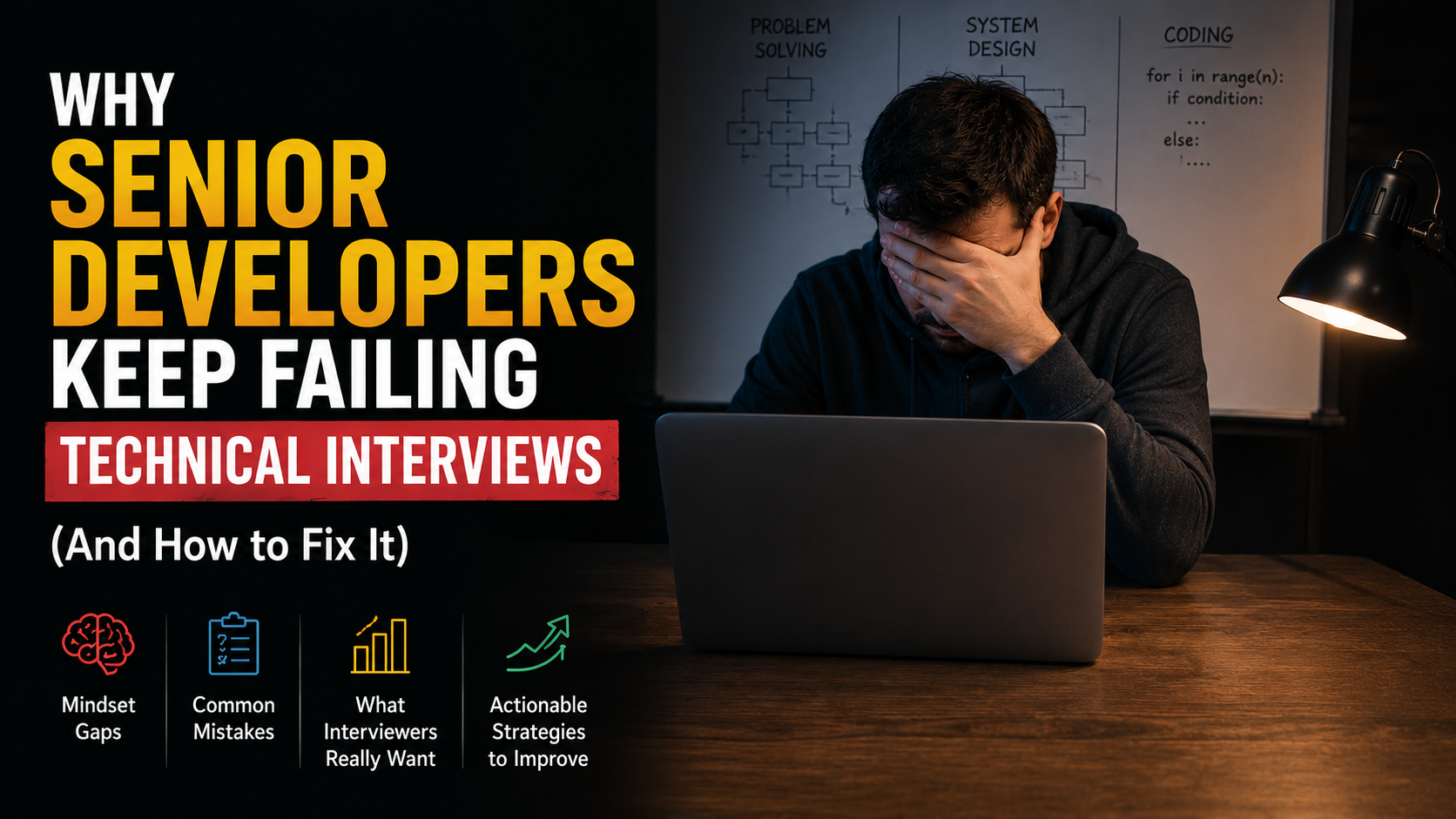
Why Senior Developers Keep Failing Technical Interviews (And How to Fix It)
Ten years of engineering experience and you still cannot clear a FAANG loop. It is more common than anyone admits, and the causes are almost never what senior developers assume they are. This guide breaks down why experienced engineers fail technical interviews and what actually fixes it.
More from AllyNerds
Not directly related — other guides readers find useful.

Ghosted After Verbal Offer: Why Recruiters Disappear
Getting ghosted after a verbal offer is frustrating and confusing. This post uncovers the internal hiring issues behind recruiter disappearances and shows you how to avoid surprises.

Recruiter Ghosting Psychology: Why Silence Speaks Volumes
Recruiter ghosting psychology reveals why candidates face silence after interviews. This post explores why companies ghost job applicants, ethical concerns, and how to interpret the silence.

Why Recruiters Ghost Candidates 9 Reasons Explained
If you’ve asked why recruiters ghost candidates, this explains the usual causes: shifting priorities, soft rejections, scheduling chaos, or backup-candidate tactics. Read brief signs to watch for and simple next steps to reopen the conversation.